
Japanese Soufflé Cheesecake
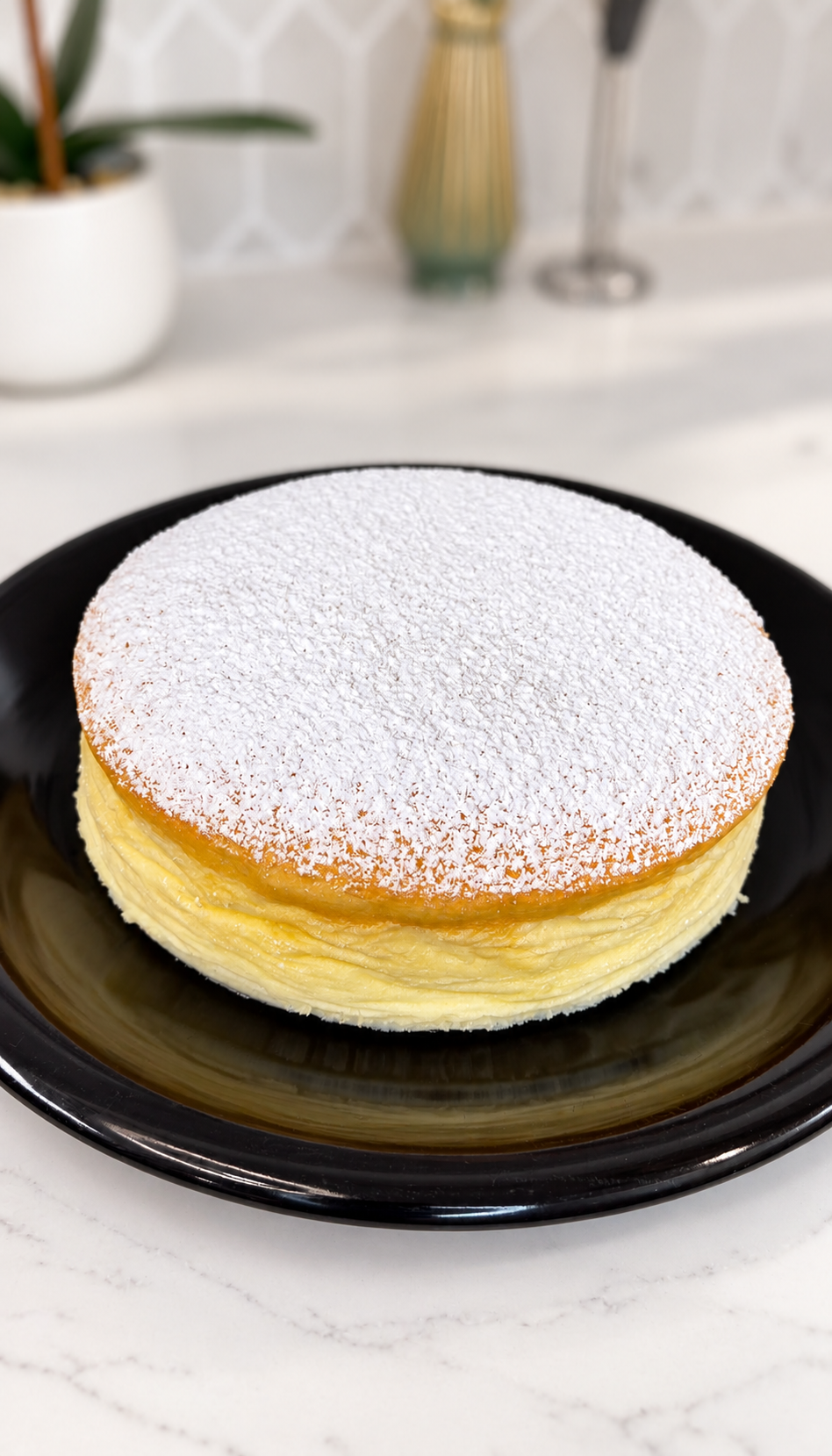
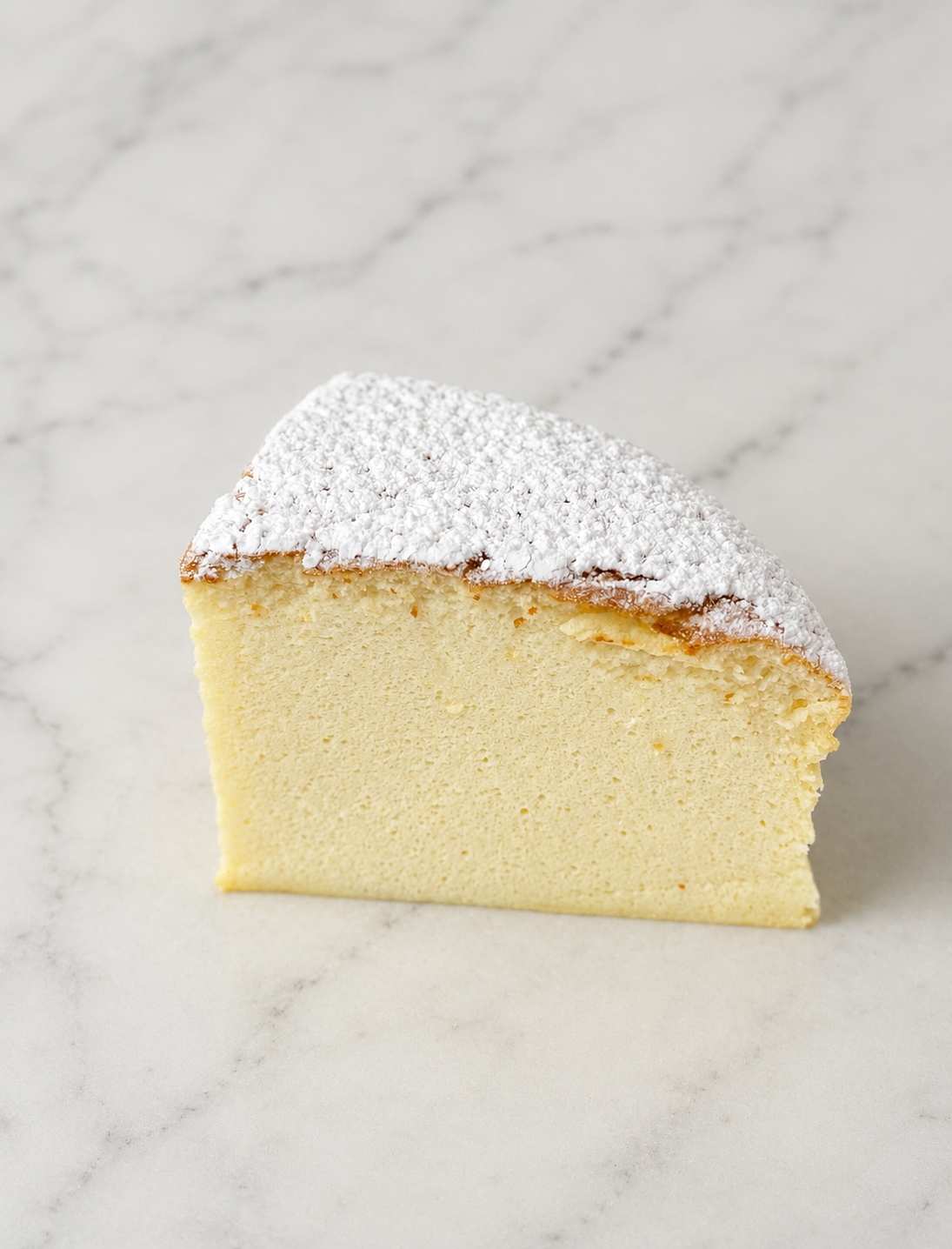
This Japanese Soufflé Cheesecake is wonderfully light and airy, with a delicate, cloud-like texture and a subtle cream cheese flavor. Its success comes down to a soft meringue, gentle folding, and a slow water-bath bake. Serve it slightly warm for an airy, cloud-like texture, or chilled for a creamier cheesecake-style finish.
Yield: 1 x 7-inch / 18 cm cheesecake
Prep time: 30 minutes
Bake time: 1 hour 20 minutes
Ingredients
180 g cream cheese
108 g whole milk
45 g unsalted butter
80 g egg yolks
5 g vanilla extract
15 g fresh lemon juice
30 g all-purpose flour
15 g cornstarch
120 g egg whites
75 g granulated sugar
Equipment
1 round 7-inch / 18 cm cake pan, ideally about 3 inches / 8 cm deep
1 large roasting pan or baking dish for the water bath
1 saucepan
2 mixing bowls
1 whisk
Electric hand mixer or stand mixer
Silicone spatula
Fine-mesh strainer
Kitchen scale
Instructions
1. Prepare the pan and oven
Preheat the oven to 340°F / 170°C, conventional bake.
Thoroughly grease the bottom and sides of the pan with butter.
Prepare hot water at approximately 175°F / 80°C for the water bath. If you’re using a springform pan, wrap the outside tightly with aluminum foil before placing it in the water bath to help prevent any water from seeping in.
2. Make the cream cheese base
Melt the cream cheese, milk, and butter in the microwave, or heat them gently in a saucepan over low heat, whisking regularly, until the butter has melted and the mixture is completely smooth. It should be smooth, fluid, and just warm, but never boiling. Let it cool slightly for 1–2 minutes, then transfer it to a larger mixing bowl before adding the remaining ingredients.
Add the egg yolks, vanilla extract, and lemon juice. Whisk gently just until combined.
Sift the all-purpose flour and cornstarch into the cream cheese mixture. Whisk gently until no visible streaks of flour remain.
Pass the batter through a fine-mesh strainer to remove any small lumps and create a very smooth base. Set aside.
3. Make the meringue
Place the egg whites in a perfectly clean, dry mixing bowl. Begin whipping at medium speed.
Once the whites become foamy, add the sugar gradually in 3 to 4 additions, allowing a short amount of time between each addition. Continue whipping until the meringue is glossy and reaches soft to medium peaks.
Add about one-third of the meringue to the cream cheese mixture. Whisk to lighten the batter.
Add half of the remaining meringue and fold it in carefully with a silicone spatula, using broad motions from the bottom of the bowl upward.
Add the final portion of meringue and continue folding just until the batter is uniform.
The batter should remain light, airy, and relatively fluid, with no large streaks of meringue remaining.
4. Bake the cheesecake
Pour the batter gently into the prepared pan. Tap the pan very lightly once or twice on the counter to release any large air bubbles. You may also run the tip of a small spatula or skewer gently through the batter to break any larger air pockets.
Place the cake pan inside a larger roasting pan or baking dish. Pour the hot water into the larger pan until it reaches about 1 inch / 2 to 3 cm high around the cake pan.
Bake using conventional heat:
25 minutes at 340°F / 170°C
then, without opening the oven door, lower the temperature to 285°F / 140°C
continue baking for 40 minutes
At the end of the baking time, turn off the oven. Leave the cheesecake inside for 15 minutes with the oven door slightly open.
Remove the cheesecake from the water bath. Allow it to cool in the pan until warm, then continue cooling until it reaches room temperature.
Carefully unmold onto a plate.
For the lightest, most soufflé-like texture, serve it slightly warm.
For a creamier texture and a stronger cream cheese flavor, refrigerate for 3 to 4 hours before serving.
Mathilde's Tips
Keep the cream cheese mixture gentle and warm. The cream cheese, milk, and butter only need to be warmed enough to become smooth. If the mixture is too hot when the egg yolks are added, they may begin to cook.
Do not overmix after adding the meringue. Fold only until the batter is uniform. Overmixing deflates the egg whites and results in a denser cheesecake.
Use a water bath. The moist, gentle heat from the water bath allows the cheesecake to bake gradually while maintaining its soft texture. The water should be hot, but it does not need to be boiling.
Storage
Store the cheesecake in the refrigerator, well covered or in an airtight container for 3 days.
The texture will be slightly less soufflé-like than when served warm, but it becomes creamier and develops a more pronounced cream cheese flavor.